

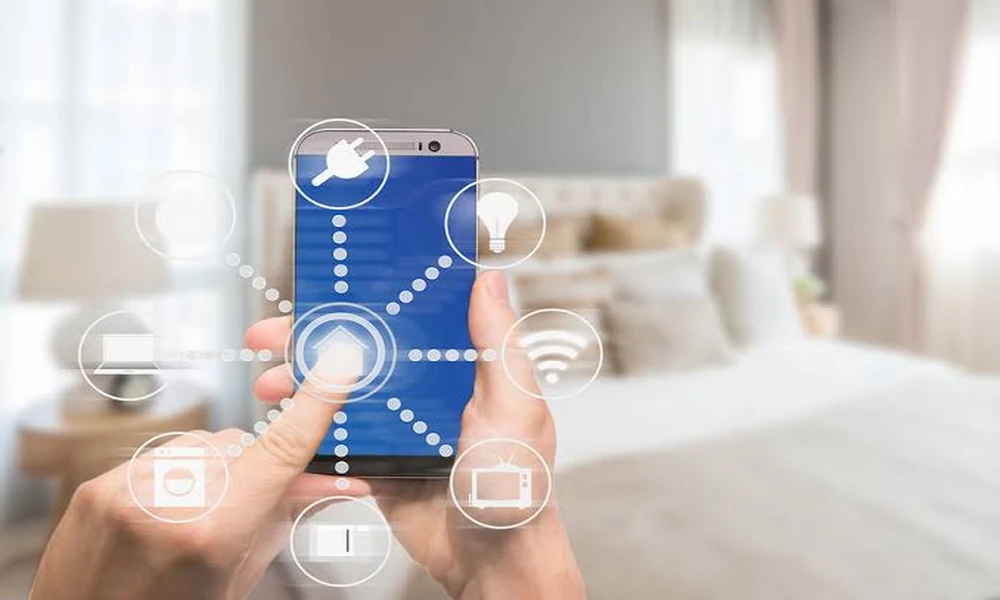
The average smart home isn’t one system; it’s a folder of apps.Consumers manage their connected devices through an average of three separate apps, according to a Censuswide survey of more than 1,000 people, and 18 % juggle five or more. Each app has its own login, its own notification style, and its own idea of what “smart” is supposed to mean.
Multiple Apps Are the Default, Not the Exception
The device count backs this up.The average smart home device-owning household has 6.2 connected devices, according to Parks Associates, down from a pandemic-era peak of 8 as more first-time buyers enter the market with smaller starter setups. Spread across a thermostat from one company, a camera from another, and a lock from a third, that’s rarely six devices in one place. It’s usually three or four separate ecosystems, each with its own app, its own account, and its own rules.
The same Censuswide survey found that 24% of consumers say they don’t feel like they actually have a smart home, specifically because their apps are separate, and 21% say controlling their devices is still hard to navigate even after buying all the hardware. Sixteen percent said outright that they wish they could control everything from one app. Roughly a fifth of the market is describing the exact same problem in the exact same words.
Automations Stop at the Brand Line
The app-count problem gets worse once a homeowner tries to make devices act together instead of separately. A motion sensor from one manufacturer triggering a light from another, or a door lock coordinating with a camera from a third brand, usually requires a third-party bridge at best and simply doesn’t work at worst. Automations built inside a single brand’s app tend to work fine within that brand. The moment a routine needs to reach across brands, the homeowner is the integration layer, manually checking one app after another to confirm what actually happened.
Systems that are installed professionally sidestep this specific failure mode by design: the sensors, locks, cameras, and panel are built by one company to work together from the start, rather than assembled after the fact from whatever happened to be on sale at three different retailers. That’s a structurally different starting point than buying pieces individually and hoping they cooperate later.
That structural difference is exactly what installers run into from the other side of the transaction. Fifty-seven percent of security dealers now say integrating a customer’s existing smart home devices with a security system is difficult, up from 44% in 2022, according to Parks Associates. That’s a rising number, not a stable one, which means the fragmentation problem is getting worse as more brands enter the category, not better as the market matures and standards catch up.
Cognitive Load Nobody Advertises
None of this shows up in a product review. A camera that sends its own notifications, a lock that sends its own notifications, and a thermostat that sends its own notifications don’t add up to one coherent picture of what’s happening at home. They add up to three separate pings a homeowner has to mentally stitch together, on their own, in the moment something actually matters.
That stitching-together work is invisible until it fails. A front door unlocks and the lights don’t respond, because the lock and the lighting system were never designed to know about each other. A camera detects motion at 2 a.m. and the notification arrives with no context about whether a door was also opened, because the camera app and the entry-sensor app have no shared vocabulary. Each individual device did its job correctly. The home, as a whole, did not respond as one.
This is the specific cost that “smart home app fatigue” is shorthand for: fragmented systems push the integration work onto the person who least wants to be doing it, at the exact moment they can least afford the delay.
Connected Isn’t the Same as Coordinated
Every device in a fragmented setup can technically connect to Wi-Fi and technically report its own status. What most of them can’t do is act as part of a single coordinated response, because they were never designed to. The real distinction underneath all the app-fatigue complaints is simple: whether the devices were built to work as one thing from the start, or stitched together afterward by whoever bought them piece by piece.
