

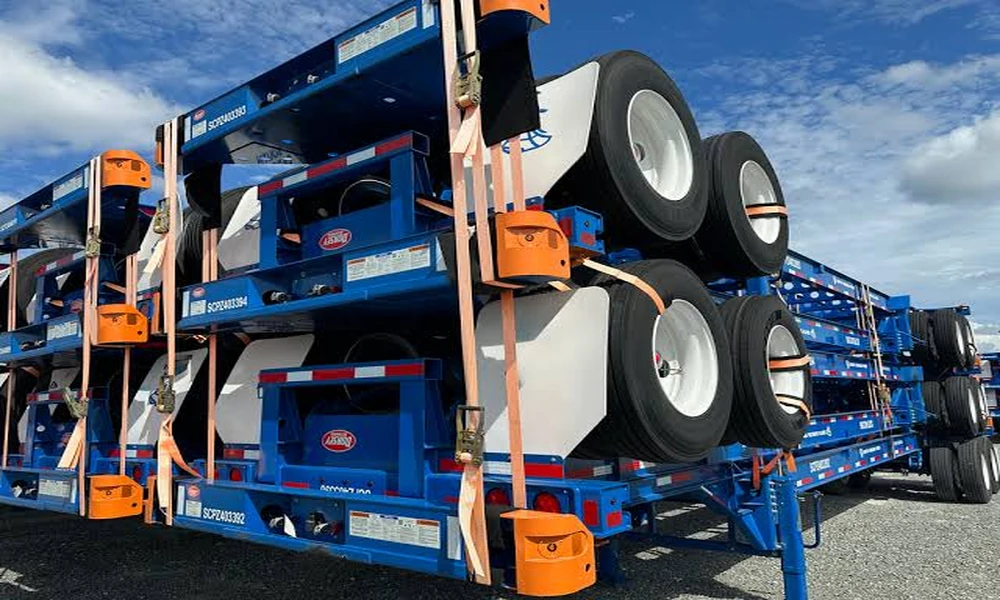
Moving cargo efficiently requires more than just selecting the right container. The chassis used to transport freight plays a major role in ensuring smooth operations, timely deliveries, and compliance with transportation requirements. Understanding the differences between chassis types can help businesses choose the most suitable equipment for their shipping needs.
Understanding Chassis in Container Transport
A chassis is a specialized trailer designed to carry shipping containers over the road. It serves as the connection between ports, rail terminals, warehouses, and distribution centers. Because cargo moves through multiple transportation modes, having the appropriate chassis is essential for maintaining efficiency throughout the supply chain.
Different chassis configurations are available to accommodate various container sizes and cargo requirements. Selecting the correct option helps reduce delays, improve safety, and optimize transportation costs.
The Role of a 40-Foot Container Chassis
One of the most commonly used options in freight transportation is the 40-foot container chassis. Designed specifically to carry standard 40-foot shipping containers, this chassis provides a stable and reliable platform for transporting cargo from ports and rail yards to its final destination.
Many businesses prefer a 40-foot container chassis because it matches one of the most widely used container sizes in international trade. Its compatibility with standard container dimensions makes loading, unloading, and transport more straightforward, reducing operational challenges and improving turnaround times.
These chassis are frequently used in industries that depend on high-volume freight movement, including retail, manufacturing, and logistics.
Why Intermodal Shipping Containers Depend on Specialized Equipment
Modern supply chains rely heavily on intermodal shipping containers, which are designed to move seamlessly between ships, trains, and trucks without requiring cargo to be unloaded and reloaded at each transfer point.
The efficiency of intermodal transportation depends on equipment that can securely support containers throughout the journey. Chassis systems are engineered with locking mechanisms that keep containers firmly in place during transit, helping prevent cargo shifts and potential damage.
By combining rail, road, and maritime transport, intermodal shipping containers allow businesses to reduce handling costs while improving overall logistics efficiency. Choosing a compatible chassis is a key part of making this transportation model work effectively.
When a Flatbed Chassis Is the Better Choice
While container chassis are designed for specific container sizes, a flatbed chassis offers greater flexibility for transporting oversized or unconventional cargo. Unlike container-specific chassis, flatbed designs feature an open platform that can accommodate equipment, machinery, construction materials, and loads that exceed standard container dimensions.
A flatbed chassis is often used when freight cannot be easily loaded into a traditional shipping container. This versatility makes it a valuable option for industries such as construction, agriculture, and heavy equipment transportation.
However, cargo transported on a flatbed chassis typically requires additional securing methods to ensure safety during transit.
Selecting the Best Chassis for Your Operations
The right chassis depends on the type of cargo being moved and the transportation network involved. A 40-foot container chassis is ideal for standard containerized freight, while intermodal shipping containers require equipment that supports smooth transfers between transportation modes. For oversized or irregular loads, a flatbed chassis provides the flexibility needed to handle unique shipping requirements.
Evaluating cargo dimensions, transportation routes, and operational goals can help businesses choose the most effective chassis solution and keep freight moving efficiently.
